

What Is Remittance and Why It Matters for Nepal?
Remittance refers to the money that migrant workers send back to their families and relatives in their home country. For Nepal, remittance represents a lifeline that supports millions of households across the nation.
Moreover, the importance of remittance in Nepal cannot be overstated. It serves as the backbone of the country’s economy, supporting families who depend on this income for their daily survival.
Nepal has a long history of labor migration. Consequently, remittance has become one of the largest sources of foreign exchange earnings for the country. Thousands of Nepali workers travel abroad each year seeking better employment opportunities.
Furthermore, these workers send billions of rupees back home annually. This money helps their families meet basic needs such as food, shelter, education, and healthcare. In addition, remittance plays a crucial role in maintaining macroeconomic stability in Nepal.
The contribution of remittance in Nepal extends beyond individual households. It impacts the entire economy by increasing purchasing power, creating demand for goods and services, and supporting various industries.
Therefore, understanding remittance is essential for anyone interested in Nepal’s economic landscape. Whether you are a student, researcher, or simply curious about the economy, remittance provides valuable insights into how Nepal sustains itself economically.
Remittance Contribution to GDP of Nepal
The contribution of remittance in GDP of Nepal has been remarkably significant over the past two decades. Remittance has consistently accounted for a substantial portion of the country’s gross domestic product.
According to recent economic data, the remittance contribution in GDP of Nepal hovers around 22 to 25 percent. This makes Nepal one of the countries most dependent on remittance income globally.
Latest Trends in Remittance GDP Contribution
Over the years, the share of remittance in GDP has shown interesting trends. During the mid-2010s, remittance reached its peak, contributing nearly 30 percent to the GDP.
However, factors such as destination country policies, global economic conditions, and migration patterns have caused fluctuations. Nevertheless, remittance remains a dominant contributor to Nepal’s economic output.
Nepal’s Dependency on Remittance
The high contribution of remittance to GDP of Nepal reveals the country’s heavy dependency on external labor income. This dependency has both positive and negative implications.
On the positive side, remittance provides steady foreign exchange reserves and supports balance of payments. On the other hand, excessive reliance creates vulnerabilities to external shocks and global economic downturns.
Furthermore, when destination countries implement restrictive immigration policies or experience economic recessions, Nepal’s economy feels the immediate impact. Therefore, diversifying income sources remains a critical challenge for policymakers.
Remittance Inflow in Nepal (Latest Overview)
Remittance inflow in Nepal has shown remarkable resilience despite global economic challenges. The inflow represents the total amount of money sent by Nepali workers from abroad to their homeland.
In recent years, Nepal has witnessed steady growth in remittance inflows. The country receives billions of dollars annually through various formal and informal channels.
Sources of Remittance Inflow
The primary sources of remittance inflow in Nepal include:
- Malaysia: One of the largest destinations for Nepali workers
- Saudi Arabia: Significant contributor to remittance inflows
- Qatar: Growing destination with substantial remittance volume
- United Arab Emirates (UAE): Popular destination for skilled and semi-skilled workers
- Kuwait: Traditional destination with established Nepali communities
- India: Largest number of Nepali workers but often uses informal channels
Moreover, the banking sector and money transfer operators facilitate most formal remittance transactions. However, a portion still flows through informal channels called “hundi,” which remains unrecorded.
Growth Patterns
The remittance inflow in Nepal has demonstrated impressive growth trajectories. Even during the COVID-19 pandemic, remittance proved resilient when many other economic sectors struggled.
This resilience can be attributed to several factors. First, many Nepali workers in essential sectors abroad continued working. Second, workers saved more due to limited spending opportunities during lockdowns. Third, they sent more money home to support families facing economic hardships.
Advantages of Remittance in Nepal
The advantages of remittance in Nepal are numerous and impact various aspects of society and economy. Understanding these benefits helps appreciate why remittance matters so much to Nepal.
Key Advantages
1. Poverty Reduction
Remittance directly contributes to poverty alleviation by providing steady income to low-income families. As a result, many households escape extreme poverty levels.
2. Improved Living Standards
Families receiving remittance can afford better housing, nutrition, and overall quality of life. Consequently, this leads to improved health outcomes and well-being.
3. Educational Opportunities
Moreover, remittance enables families to invest in children’s education. Many students can pursue higher education because their parents work abroad.
4. Healthcare Access
Remittance income allows families to access better healthcare facilities. Therefore, health indicators in remittance-receiving households generally show improvement.
5. Economic Stability
Furthermore, remittance provides macroeconomic stability by supporting foreign exchange reserves. This helps maintain currency stability and import capacity.
6. Banking Sector Growth
The advantages of remittance in Nepal extend to the financial sector. Banks and financial institutions benefit from increased deposits and transaction volumes.
7. Real Estate Development
In addition, remittance fuels the real estate sector. Many families invest in land and property using remittance income.
8. Entrepreneurship Opportunities
Some families use remittance as seed capital for small businesses. Similarly, returning migrants often start enterprises using their savings and experience.
9. Rural Development
Remittance reaches even remote rural areas, bringing economic opportunities to regions with limited alternatives. As a result, rural economies receive vital financial injections.
10. Consumer Market Growth
Finally, increased purchasing power from remittance creates demand for goods and services, stimulating various industries.
Importance of Remittance in Nepal (Explained in Points)
The importance of remittance in Nepal can be understood through multiple dimensions. Let’s explore the importance of remittance in Nepal in points:
1. Primary Income Source
For millions of Nepali families, remittance serves as the primary or only source of income. Without it, these households would face severe financial hardship.
2. Foreign Exchange Earnings
Remittance is Nepal’s largest source of foreign currency. Therefore, it helps the country maintain adequate foreign exchange reserves for international transactions.
3. Balance of Payments Support
Moreover, remittance helps offset Nepal’s persistent trade deficit. The country imports far more than it exports, and remittance helps balance this gap.
4. Employment Alternative
Given limited domestic employment opportunities, foreign employment provides an essential alternative. Consequently, remittance represents earnings from these overseas jobs.
5. Social Safety Net
Furthermore, remittance acts as an informal social safety net. In the absence of comprehensive social security systems, remittance provides crucial support during emergencies.
6. Human Capital Development
The importance of remittance in Nepal extends to skill development. Workers gain valuable experience abroad, which can benefit Nepal upon their return.
7. Financial Inclusion
In addition, remittance promotes financial inclusion. Many rural families open bank accounts specifically to receive remittance, bringing them into the formal financial system.
8. Infrastructure Development
Some remittance is invested in local infrastructure through community initiatives. Similarly, individual families improve their homes and local surroundings.
9. Cultural Exchange
Remittance also facilitates cultural exchange as migrants return with new ideas, perspectives, and experiences from abroad.
10. Economic Multiplier Effect
Finally, remittance spending creates multiplier effects throughout the economy, generating employment and income for others in the supply chain.
Role of Remittance in Economic Development of Nepal
The role of remittance in economic development of Nepal is multifaceted and deeply intertwined with various economic sectors. Understanding this role provides insights into Nepal’s economic structure.
Impact on Key Sectors
Banking and Financial Services
Remittance has transformed Nepal’s banking landscape. Financial institutions have expanded their networks specifically to capture remittance flows. Moreover, banks now offer specialized remittance products and services.
The increased deposit base from remittance has enabled banks to extend more credit to businesses and individuals. Consequently, this supports broader economic activities and investment.
Real Estate and Construction
Furthermore, the role of remittance in economic development of Nepal is particularly visible in real estate. Many families invest remittance income in purchasing land or constructing homes.
This creates significant demand in the construction sector, generating employment for construction workers, suppliers, and related services. As a result, entire value chains benefit from remittance-driven demand.
Consumption and Retail
In addition, remittance drives consumption patterns in Nepal. Families with remittance income have higher purchasing power, which translates to increased demand for consumer goods.
Retailers, wholesalers, and manufacturers benefit from this expanded market. Therefore, remittance indirectly supports numerous businesses across the country.
Agriculture and Rural Economy
Similarly, remittance impacts agricultural practices. Some families invest in modern farming equipment or improved agricultural inputs using remittance income.
However, there’s also a negative aspect—many agricultural workers migrate, leading to labor shortages in farming communities. Consequently, some agricultural land remains underutilized.
Education Sector
Moreover, remittance has significantly boosted the private education sector. Families can afford private schools, coaching centers, and higher education institutions.
This has created a thriving education market with numerous private institutions emerging to meet demand. Furthermore, many students pursue foreign education using remittance savings.
Healthcare Industry
The role of remittance in economic development of Nepal extends to healthcare. Private hospitals, clinics, and pharmaceutical businesses benefit from increased healthcare spending.
Families receiving remittance can access better medical facilities, including specialized treatments and diagnostic services. As a result, the healthcare sector has experienced substantial growth.
Use of Remittance in Nepal
Understanding the use of remittance in Nepal provides insights into household spending priorities and economic patterns. Research shows specific trends in how families utilize this income.
Primary Uses
Daily Consumption (40-50%)
The largest portion of remittance goes toward daily household consumption. This includes food, clothing, utilities, and other routine expenses. Therefore, remittance primarily serves immediate survival needs.
Education (15-20%)
Moreover, education represents a significant spending category. Families invest in children’s schooling, tuition fees, books, and educational supplies. Consequently, remittance enables better educational outcomes.
Healthcare (10-15%)
Furthermore, the use of remittance in Nepal includes substantial healthcare expenditure. Medical treatment, medicines, and health insurance consume a notable portion of remittance income.
Housing and Property (15-20%)
In addition, many families invest in building or improving homes. Some purchase land or property as long-term investments. Similarly, home renovations and improvements are common uses.
Loan Repayment (10-15%)
A significant amount goes toward repaying migration-related loans. Many workers borrow money to finance their foreign employment, including visa fees, recruitment costs, and travel expenses.
Savings and Investment (5-10%)
A smaller portion is saved or invested in banks, cooperatives, or other financial instruments. However, the savings rate from remittance remains relatively low.
Social Obligations (5-10%)
Moreover, families use remittance for social and religious ceremonies, festivals, and community obligations. These cultural expenses are important in Nepali society.
Business Investment (Minimal)
Unfortunately, very little remittance is used for productive business investments. Most families prioritize consumption over entrepreneurial activities. Consequently, the productive use of remittance in Nepal remains limited.
Impact of Remittance in Nepal
The impact of remittance in Nepal encompasses both positive and negative dimensions. A balanced assessment requires examining both aspects carefully.
Positive Impacts
Economic Stability
Remittance provides crucial economic stability during difficult times. Moreover, it acts as a counter-cyclical buffer during domestic economic downturns.
Poverty Reduction
The impact of remittance in Nepal is most visible in poverty statistics. Remittance-receiving households show significantly lower poverty rates compared to non-receiving households.
Improved Human Development Indicators
Furthermore, regions with high remittance inflows show better health and education indicators. Consequently, overall human development improves in these areas.
Financial Sector Development
In addition, remittance has driven financial sector expansion. Banks have opened branches in remote areas specifically to serve remittance customers.
Increased Consumer Spending
Similarly, the impact of remittance in Nepal is evident in growing consumer markets. Shopping complexes, retail chains, and service providers have flourished.
Negative Impacts
Brain Drain
However, foreign employment leads to brain drain. Skilled and educated youth leave Nepal, depriving the country of valuable human capital.
Labor Market Distortions
Moreover, mass migration creates labor shortages in certain sectors. Agriculture particularly suffers from lack of workers. Consequently, wages for remaining workers may increase, but productivity suffers.
Dependency Culture
Furthermore, excessive reliance on remittance can create dependency. Some families become passive recipients rather than seeking local economic opportunities.
Dutch Disease Effect
The impact of remittance in Nepal includes potential Dutch Disease effects. Large remittance inflows can appreciate the currency, making exports less competitive.
Social Issues
In addition, prolonged separation causes family problems. Children growing up without fathers, spousal separation, and psychological stress are common social costs.
Underutilization of Productive Sectors
Similarly, when remittance primarily funds consumption rather than investment, productive sectors remain underdeveloped. Therefore, long-term economic transformation becomes challenging.
Informal Channel Risks
Moreover, remittance flowing through informal channels escapes taxation and regulatory oversight. Consequently, the government cannot leverage these flows for development.
Foreign Employment and Remittance in Nepal
Foreign employment and remittance in Nepal are intrinsically linked. Understanding migration patterns helps explain remittance trends and dynamics.
Major Destination Countries
Nepal sends workers to numerous countries, but certain destinations dominate:
Gulf Countries
The Gulf region, including Qatar, Saudi Arabia, UAE, and Kuwait, employs hundreds of thousands of Nepali workers. Moreover, these destinations offer opportunities for both skilled and unskilled workers.
Malaysia
Furthermore, Malaysia has emerged as a top destination for Nepali workers. The country’s diverse economy provides employment across various sectors.
India
In addition, India hosts the largest number of Nepali workers due to the open border arrangement. However, much of this employment remains informal and unrecorded.
South Korea
Similarly, South Korea’s Employment Permit System (EPS) provides legal pathways for Nepali workers. These workers typically earn higher wages compared to other destinations.
Japan
Moreover, Japan has recently become an attractive destination, particularly for technical trainees and skilled workers.
Employment Sectors
Foreign employment and remittance in Nepal involve workers across various sectors:
- Construction and infrastructure
- Security services
- Hospitality and tourism
- Manufacturing
- Domestic work
- Agriculture
- Healthcare support services
Migration Challenges
However, foreign employment comes with significant challenges:
High Migration Costs
Workers often pay excessive fees to recruitment agencies. Consequently, they begin their employment heavily indebted.
Worker Exploitation
Moreover, many Nepali workers face exploitation abroad, including wage theft, poor working conditions, and contract substitution.
Safety Concerns
Furthermore, workplace accidents and safety issues remain serious concerns, particularly in construction and manufacturing sectors.
Legal Protections
In addition, limited legal protections in some destination countries leave workers vulnerable to abuse and mistreatment.
Skill Underutilization
Similarly, many educated Nepali workers accept jobs below their qualification levels due to limited options.
Remittance Companies in Nepal
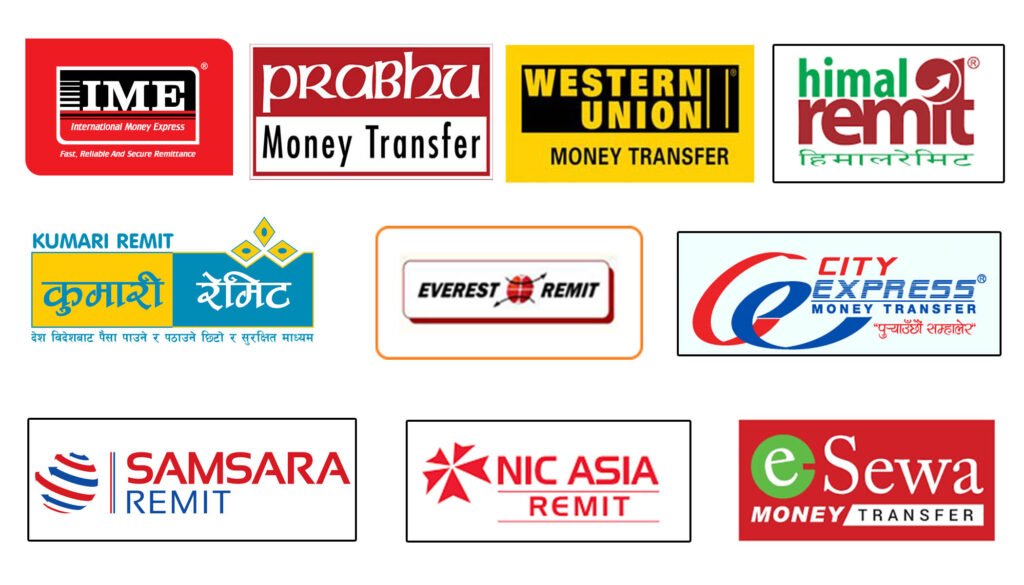
The remittance industry in Nepal has grown substantially, with numerous companies facilitating money transfers. Understanding the list of remittance company in Nepal helps individuals choose reliable services.
Top Remittance Company in Nepal
IME (International Money Express)
IME stands as the market leader among remittance companies in Nepal. With the most extensive network of branches and agents across the country, IME provides reliable and quick service. Moreover, the company offers competitive exchange rates and multiple payment options.
Prabhu Money Transfer
Furthermore, Prabhu Money Transfer operates as another major player. The company maintains strong partnerships with international remittance providers and has widespread coverage throughout Nepal.
Western Union
In addition, Western Union, the global remittance giant, operates through partnerships with Nepali banks and financial institutions. Consequently, recipients can collect money from numerous locations.
MoneyGram
Similarly, MoneyGram provides international money transfer services through local partners. The company offers quick transfers and convenient pickup locations.
Himal Remit
Moreover, Himal Remit has emerged as a growing domestic player. The company focuses on providing affordable and accessible remittance services.
Khalti Remit
Furthermore, Khalti has entered the remittance market with digital solutions, allowing users to receive money directly into mobile wallets and bank accounts.
eSewa
In addition, eSewa offers digital remittance services, enabling convenient mobile-based transactions for recipients.
List of Remittance Company in Nepal
The complete list of remittance company in Nepal includes:
- IME (International Money Express)
- Prabhu Money Transfer
- Western Union (through partner institutions)
- MoneyGram (through partner institutions)
- Himal Remit
- Samsara Remit
- City Express Money Transfer
- Mukti Remit
- Reliable Money Transfer
- Nepal Bangladesh Bank Remit
- Khalti Remit
- eSewa Remit
- Prithvi Remit
- Smart Choice Money Transfer
- Global IME Remit
Choosing the Right Remittance Service
When selecting from the top remittance company in Nepal, consider these factors:
Exchange Rates
Different companies offer varying exchange rates. Therefore, comparing rates can help maximize the amount received.
Service Fees
Moreover, transfer fees differ across providers. Some charge flat fees while others use percentage-based charges.
Speed of Transfer
Furthermore, transfer speed varies. Some companies offer instant transfers while others take several hours or days.
Accessibility
In addition, consider the availability of pickup locations. The top remittance company in Nepal should have extensive branch networks.
Reliability and Security
Similarly, choose licensed and regulated companies to ensure safe and secure transactions.
Customer Service
Finally, responsive customer support helps resolve issues quickly and maintains trust in the service.
Remittance Tax in Nepal (Clear Explanation)
Understanding remittance tax in Nepal is crucial for both senders and receivers. However, the taxation framework is relatively straightforward compared to many countries.
Current Tax Status
Generally Tax-Free
Remittance received by individuals in Nepal is generally not subject to direct income tax. Therefore, families receiving money from abroad do not pay tax on these amounts.
This policy recognizes that remittance represents income already earned and often taxed in the source country. Moreover, imposing additional taxes would discourage formal remittance channels.
Bank Transaction Charges
However, while remittance itself is tax-free, banks and financial institutions charge service fees for processing transfers. Consequently, recipients pay transaction costs rather than taxes.
Indirect Taxation
Consumption Taxes
Furthermore, remittance tax in Nepal exists indirectly. When families spend remittance income on goods and services, they pay Value Added Tax (VAT) embedded in prices.
Therefore, the government collects substantial tax revenue from remittance-funded consumption. Similarly, customs duties on imported goods purchased with remittance contribute to government revenues.
Property and Investment Taxes
In addition, when families invest remittance in property or businesses, various taxes apply:
- Property registration fees
- Annual property taxes
- Business registration and renewal fees
- Capital gains taxes on property sales
Income Tax on Business Income
Moreover, if individuals use remittance to start businesses, the resulting business income becomes taxable under regular income tax provisions.
Tax on Interest Income
Furthermore, interest earned on remittance deposits in banks is subject to income tax. Currently, Nepal imposes withholding tax on bank interest income.
Reporting Requirements
Large Transactions
Financial institutions must report large remittance transactions to Nepal Rastra Bank as part of anti-money laundering measures. However, this is regulatory reporting, not taxation.
Source Verification
Moreover, banks may request documentation about remittance sources for compliance purposes, particularly for unusually large amounts.
Future Considerations
Policymakers occasionally debate whether to implement direct remittance tax in Nepal. However, such proposals face strong opposition due to concerns about:
- Encouraging informal channels
- Reducing formal remittance inflows
- Adding burden to already struggling families
- Administrative complications
Therefore, the current tax-free policy for remittance likely continues for the foreseeable future.
Challenges in Nepal’s Remittance Sector
Despite its importance, Nepal’s remittance sector faces several significant challenges that require attention and solutions.
High Transaction Costs
Transaction costs for sending remittance to Nepal remain relatively high compared to the global average. Moreover, these costs reduce the actual amount received by families.
Service fees, exchange rate margins, and intermediary charges accumulate, making remittance expensive. Consequently, some workers resort to informal channels to avoid these costs.
Informal Channel Competition
Furthermore, the “hundi” system—informal money transfer networks—continues to operate alongside formal channels. These informal systems offer convenience and sometimes better rates.
However, informal channels escape regulation and taxation. In addition, they pose risks including fraud, money laundering, and terrorism financing concerns.
Limited Financial Literacy
Moreover, many remittance recipients lack financial literacy. They don’t understand banking products, investment options, or financial planning.
Consequently, opportunities to leverage remittance for productive purposes remain missed. Therefore, financial education programs are critically needed.
Inadequate Rural Infrastructure
Furthermore, rural areas often lack adequate banking infrastructure. While remittance reaches these regions, limited banking services restrict how families can utilize this money.
Similarly, poor digital connectivity prevents adoption of modern digital remittance services in remote areas.
Productive Use Challenge
In addition, the biggest challenge remains encouraging productive use of remittance. Most remittance goes toward consumption rather than investment.
Without transformation into productive capital, remittance provides only temporary relief rather than long-term development. Therefore, policy interventions are needed.
Documentation and Verification Issues
Moreover, workers sometimes face difficulties providing required documentation for formal remittance channels. Consequently, they may opt for informal transfers.
Exchange Rate Vulnerabilities
Furthermore, recipients face exchange rate risks. Currency fluctuations between the earning and receiving countries can significantly impact the value received.
Delayed Transfers
In addition, some remittance channels experience delays, particularly during holidays or technical issues. These delays create hardship for families depending on timely transfers.
Worker Protection Gaps
Similarly, inadequate protection for migrant workers abroad affects remittance flows. Exploitation, wage theft, and contract violations reduce amounts available to send home.
Data and Research Gaps
Finally, comprehensive data on remittance uses and impacts remains limited. Therefore, evidence-based policy making becomes challenging.
How to Improve the Remittance System in Nepal
Improving Nepal’s remittance system requires coordinated efforts across multiple areas. Here are actionable recommendations:
Reduce Transaction Costs
Promote Competition
Encourage more remittance companies to enter the market. Moreover, competition naturally drives down costs and improves services.
Leverage Technology
Furthermore, digital remittance platforms significantly reduce costs. Therefore, promoting fintech solutions should be a priority.
Negotiate Bilateral Agreements
In addition, Nepal should negotiate agreements with destination countries to reduce transfer costs and improve exchange rates.
Strengthen Formal Channels
Improve Service Quality
Moreover, formal remittance providers must enhance service quality to compete with informal channels. Quick transfers, convenient locations, and responsive support are essential.
Expand Rural Coverage
Furthermore, extending remittance services to remote areas brings more transactions into the formal system. Mobile banking and agent networks can help achieve this.
Simplify Procedures
In addition, reducing documentation requirements while maintaining security standards makes formal channels more attractive.
Enhance Financial Literacy
Community Education Programs
Implement widespread financial literacy programs in remittance-receiving communities. Moreover, focus on savings, investment, and entrepreneurship skills.
School Curriculum Integration
Furthermore, include financial education in school curricula to build long-term financial capability.
Targeted Training
In addition, provide specific training for returning migrants on business management and investment opportunities.
Promote Productive Use
Incentive Programs
Create incentive schemes for families that invest remittance in productive activities. Moreover, offer tax benefits or matching grants for business investments.
Access to Credit
Furthermore, develop loan products that complement remittance income for business creation or expansion.
Entrepreneurship Support
In addition, establish support systems including business incubation, mentoring, and market linkages for remittance-funded enterprises.
Improve Worker Protection
Strengthen Diplomatic Efforts
Nepal must intensify diplomatic efforts to protect migrant workers’ rights abroad. Moreover, establish robust complaint mechanisms and support systems.
Pre-Departure Orientation
Furthermore, comprehensive pre-departure training helps workers understand their rights and available support mechanisms.
Destination Country Agreements
In addition, bilateral labor agreements with destination countries should include strong worker protection provisions.
Leverage Technology
Digital Payment Systems
Promote digital remittance platforms that reduce costs and increase convenience. Moreover, integrate remittance with mobile wallets and digital banking.
Blockchain Solutions
Furthermore, explore blockchain-based remittance systems that offer transparency, speed, and lower costs.
Data Analytics
In addition, utilize data analytics to understand remittance patterns and design targeted interventions.
Policy Reforms
Regulatory Framework
Strengthen regulatory frameworks that protect consumers while encouraging innovation. Moreover, ensure compliance with international anti-money laundering standards.
Research and Monitoring
Furthermore, invest in comprehensive research to understand remittance dynamics and impacts. Therefore, evidence-based policies can be developed.
Coordination Mechanisms
In addition, establish coordination among government agencies, financial institutions, and civil society for holistic approaches.
Conclusion
Remittance in Nepal represents far more than simple money transfers—it is the economic lifeline sustaining millions of families and significantly contributing to national development. Throughout this comprehensive guide, we have explored how remittance shapes Nepal’s economic landscape.
The contribution of remittance in GDP of Nepal, accounting for approximately 22-25 percent, demonstrates its critical importance. Moreover, the advantages of remittance in Nepal extend across poverty reduction, improved living standards, education access, and economic stability.
However, while celebrating these benefits, we must acknowledge the challenges. The impact of remittance in Nepal includes negative dimensions such as brain drain, labor market distortions, and dependency culture. Furthermore, the predominant use of remittance in Nepal for consumption rather than productive investment limits long-term development potential.
The role of remittance in economic development of Nepal remains significant across banking, real estate, consumption, and various other sectors. Similarly, foreign employment and remittance in Nepal are inseparably linked, with hundreds of thousands of workers abroad making this financial flow possible.
Looking forward, Nepal must work to maximize remittance benefits while minimizing negative impacts. This requires reducing transaction costs, promoting productive use, strengthening worker protection, and improving financial literacy. Moreover, the top remittance company in Nepal must continue innovating to provide better, cheaper, and more accessible services.
Understanding remittance tax in Nepal helps recipients navigate their financial obligations, while recognizing that remittance remains generally tax-free for individual recipients.
In conclusion, remittance will likely remain central to Nepal’s economy for years to come. Therefore, developing comprehensive strategies to leverage this resource for sustainable development represents one of Nepal’s most pressing policy priorities. Only through coordinated efforts can Nepal transform remittance from a survival mechanism into a genuine engine for economic transformation and prosperity.